Showing posts with label curry. Show all posts

Thursday, June 5, 2014

Gulai Kambing - Padang Style Lamb Curry

Gulai Kambing is a very popular dish, especially in Sumatra and peninsular Malaysia.  "Gulai" is a type of sauce from the Minangkabau ethnic group in West Sumatra.  Today, gulai is made with all kinds of meat, including squid, crab, prawns, beef, chicken, and all other meats.  However, the most popular kind of gulai is made with goat or lamb ("Kambing" means the animal "goat", but when speaking of meat, kambing can refer to goat and lamb meat interchangeably).  This dish is a popular part of what is called Padang food (makanan Padang) in Indonesia, which means food from Sumatera Barat province (the capital of which is Padang), which is very popular in all parts of Indonesia and Malaysia.  This dish is a lovely part of any Indonesian meal, and often serves to cool off the palette due to its mild flavor.  It is in many ways idiomatic to the Indian Korma, which also tends to be creamy, somewhat mild, and yellowish in color.  Now, let's get cooking!


Gulai Kambing recipe (serves 1-2)

For the rempah (spice paste).  Blend these ingredients to a fine paste.
  • 4 small shallots
  • 3 garlic cloves
  • 1/2 inch galangal
  • 1/2 inch fresh turmeric
  • 1/2 inch ginger
  • 1/4 tsp fennel powder
  • 1/4 tsp cumin powder
  • 1/4 tsp coriander powder
  • 3 candlenuts
  • 1/4 tbsp palm sugar (gula jawa is best)
  • 1/4 tsp ground white peppercorn
  • 1 tsp salt
Other ingredients

  • About 200g lamb meat, you can also use mutton or goat.  Shoulder meat is best.
  • 2-3 kaffir lime leaves, ripped
  • 1 lemongrass stalk, white part only, bruised
  • 2 cloves
  • 1 star anise
  • 1 Indonesian bay leaf (these are not the same as regular bay leaves, but if needed you can substitute regular ones.  Look for leaves labeled "daun salam" or "Indonesian bay leaf")
  • 1 cardamom pod
  • 1 cinnamon stick
  • 1.5 tbsp oil for frying
  • 400 ml coconut milk (ayam brand is the best)
  • 2 tbsp tamarind concentrate
  • water
Let's go!

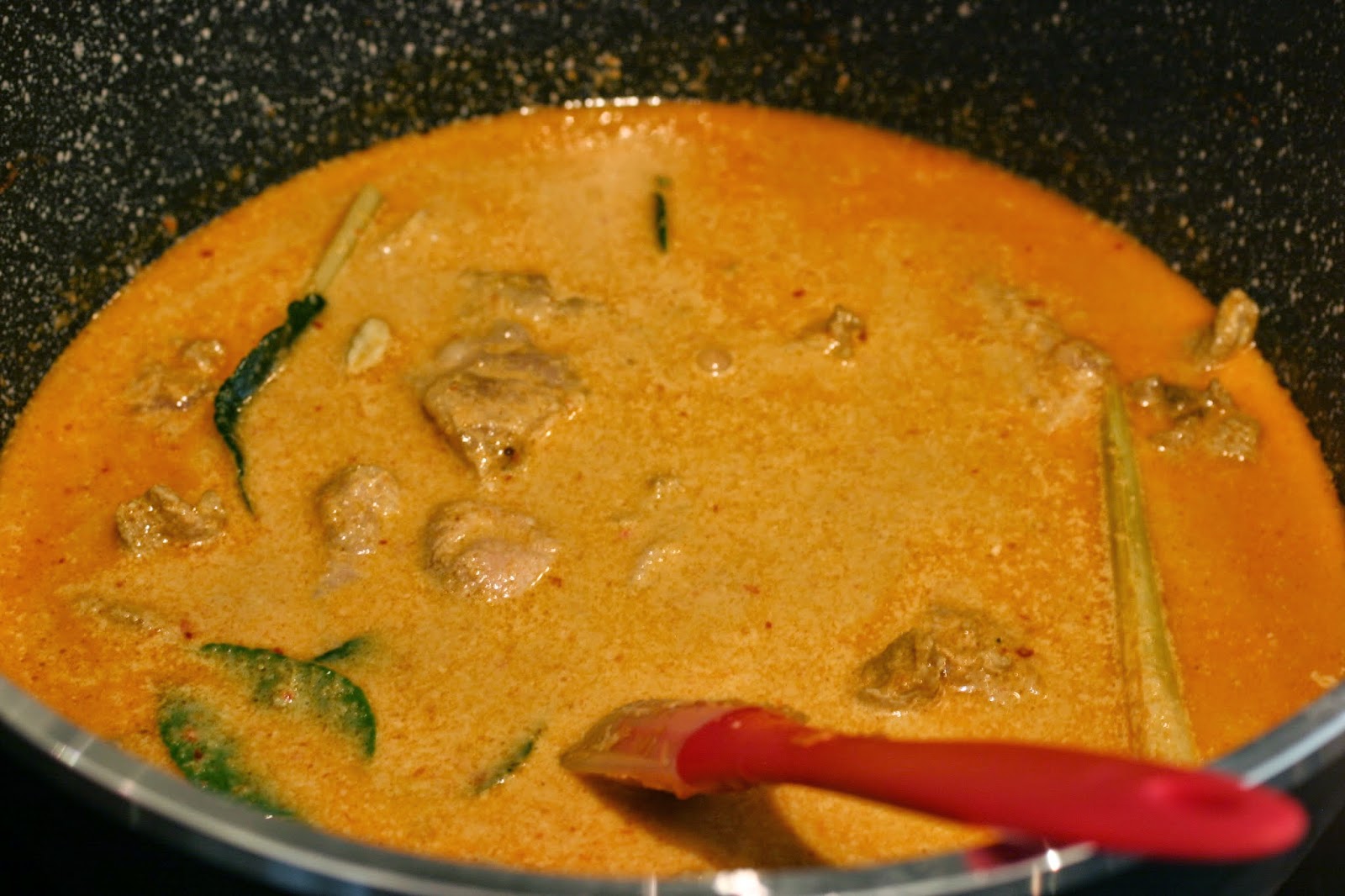
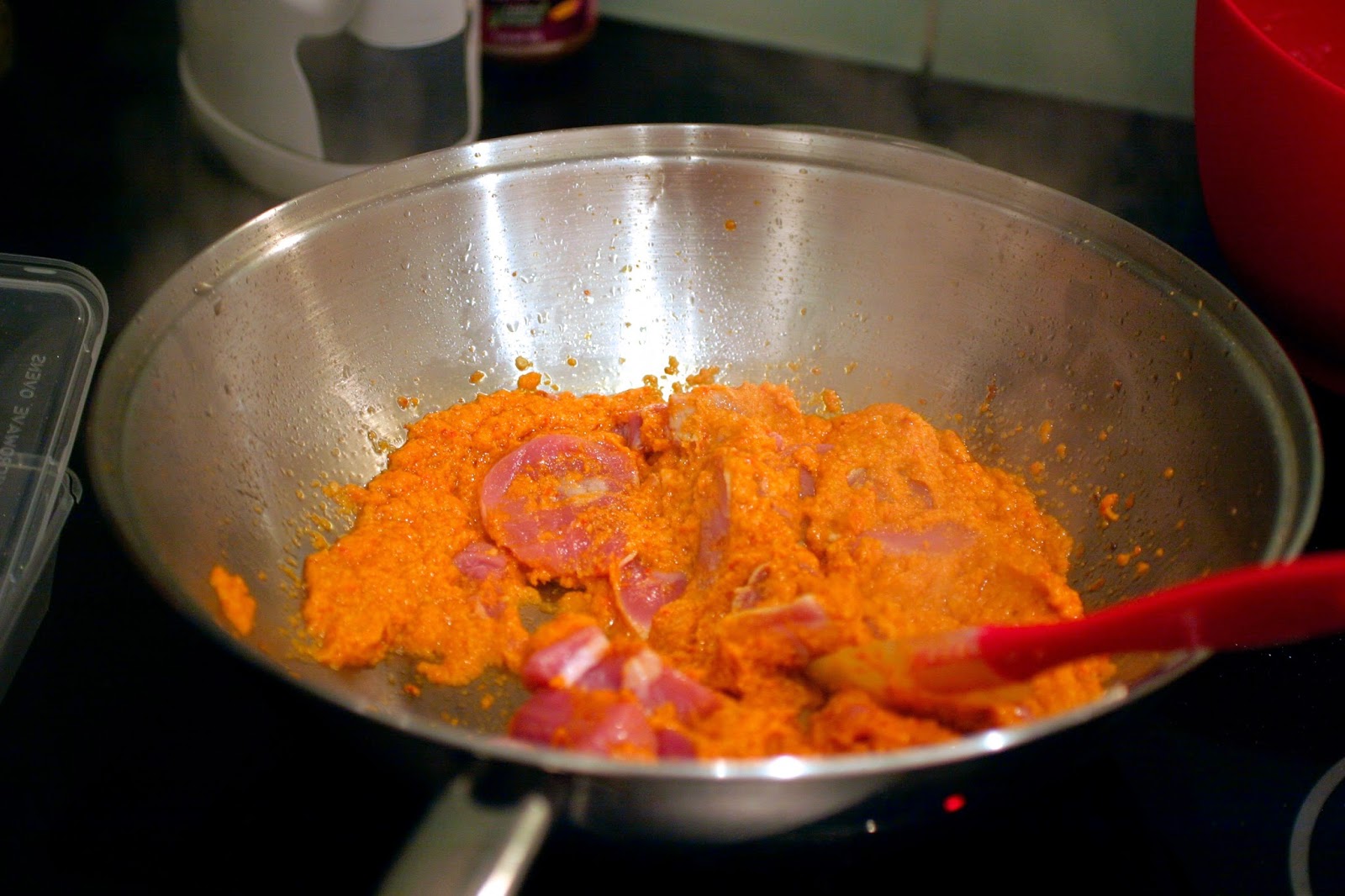
First, heat the oil in a large wok or other deep pot (I use a faitout).  Fry the whole spices (lime leaves, lemongrass, cloves, star anise, daun salam, cardamom, cinnamon) in the oil until fragrant, then adding the rempah (curry paste.)  Fry for about five minutes until aromatic and the oil separates out.  Then add in the lamb pieces and stir into the rempah until no longer pink.  Then pour in the coconut milk and tamarind.  Mix well with the spice paste and add enough water now to cover the lamb pieces entirely.  Let simmer on medium-low heat for about 2-3 hours depending on how thick you like your sauce.  In Sumatera people like it very thick, but the Javanese way is to leave the sauce a litle thinner.  Either way will be delicious!  Check seasonings before serving with plain rice, nasi kuning, nasi liwet, roti jala/canai or anything else you like.  Enjoy your gulai!


Tuesday, June 3, 2014

Rendang Kambing


This week I was lucky enough to have my cousin visit me for a few days all the way from the United States.  I knew just what to cook to mark the occasion!  Now I say this recipe serves three, but not when my cousin is there!  He cleaned out my pot of spiced lamb and moved on to the reserved chicken rendang I have in the fridge for my breakfasts since he liked it so much!  I think rendang is always appropriate for breakfast, lunch or dinner, and is always the perfect thing to serve guests, so I always have a little stash of it in my fridge!  Now, a little history of the dish--

Rendang comes to us from the Minangkabau people from Sumatera Barat (West Sumatra) province.  If given a choice it's likely most Indonesian people would say that rendang, along with nasi goreng, are the two foods most representative of Indonesia.  Rendang originated when the Minang would slaughter a whole cow or water buffalo, then cook it in a mouthwatering mixture of spices so as to preserve the meat for a long time.  Luckily though we have moved past this time before refrigeration and rendang is now commonly made with all sorts of meat, and loved by all sorts of people!  Dishes like this allow people to connect with eachother, working together tirelessly to make the rempah, then enjoying stimulating and friendly conversation during the long cooking time, and finally, sharing a delicious meal.  I think it is truly in the spirit of the kampung to share this dish which you can find from the fanciest restaurants in Sinagapore to the humblest home kitchens of the Indonesian countryside, being cooked on wood fires.

*P.S. I always use lamb when I make my rendang as I think it is the best meat to go alongside the rendang spices.


Rendang Domba recipe: Serves 2-3

For the rempah (curry paste)
  • 2 tsp. ground coriander
  • 2 tsp. ground cumin
  • 2 tsp. ground fennel
  • 1 ground star anise
  • 3 ground cloves
  • 1 tsp. serbuk kari daging (optional)
  • 2 long red chilis
  • 1 handful of dried chilis, (about 10-20 depending on preference) soaked in hot water for 20 minutes
  • 2 inch knob of peeled ginger*
  • 2 inch knob peeled galangal*
  • 5 candlenuts
  • 7 cloves garlic
  • 150g peeled shallots
Other ingredients
  • 2-3 tbsp palm sugar or to taste (gula jawa is best)
  • 4 star anise
  • 2 cloves
  • 8 kaffir lime leaves
  • 2 lemongrass, white part only, bashed
  • 1 can (400 ml) coconut milk or 200 ml coconut cream
  • Water
  • Salt to taste
  • 3 tbsp tamarind concentrate or to taste
  • 1.5 kilos of lamb, I like to buy a whole shoulder, then cut what meat I can off, then throw the bone and any meat left in with he rest.  This is fine, as the meat will fall off later anyway.  Shoulder is the best cut!
*for ginger and galangal, slice thinly against the fibers of the rhizome.  These can be unpleasant in the mouth if left intact and blanding will not shorten them.


Let's start!

First, make the rampah using a food processor, placing one ingredient in the processor and blending until fine before adding the next.  Start with the harder ingredients, and add in the softer ones after.  The order should be roughly galangal, then ginger, then candlenuts, then garlic, then dried chilis, then fresh chilis, and shallots last, followed by dry spices which can just be mixed in with the paste as they don't need to be blended.  Now, heat enough oil to cover the bottom of a soup pot, dutch oven, wok, or faitout (I love to use faitouts for slow cooked dishes like this).  Then fry the spice paste for a few minutes until it is nice and fragrant and the oil separates out.  The paste should look a little caramelized at this point. 


Now throw in the kaffir lime leaves and lemongrass, followed by the lamb meat.  Fry the meat in the spices until no longer pink.


Now pour in the tamarind concentrate, followed by the coconut milk/cream.  If the milk/cream doesn't cover them meat entirely, add some water.  Season with salt, palm sugar, and lemongrass.  Drop in the cloves/anise at this time as well.  Let this mixture simmer on low heat uncovered for several hours, stirring regularly.  Mine took about 5 until it was ready to eat, but time will vary.


Closer to the end, the oil from the coconut will separate and fry the meat in the spice mixture.  The rendang should be very dry and have little to no sauce before taking away from heat.  When done, serve with rice.  Leftovers can be saved in the fridge for about 1.5 months depending on how wet your rendang is.  Enjoy!


This finished rendang won't last long at my house!

Monday, June 2, 2014

Kari Ayam

Welcome to the kampung!  I'm so happy to be here sharing my love for food.  I want to start by introducing what Indonesian people call Kari.  Indonesia has a very special and unique way of making curry that is different from the Indian, Thai, Chinese, and all other versions.  The Indonesian curry is thought to have come from Indian influence adapted to suit local tastes and include local ingredients.  This dish, kari ayam ("curry chicken"), is a very popular today in Indonesia.  It is very common for all Indonesian people from businessmen to farmers, so it is fitting that I cook it often in my "kampung" kitchen.  This is my own recipe that has taken me years to perfect!  I hope you will like it very much!

Kari Ayam recipe (serves 2-3)
  • 2 inch knob peeled galangal*
  • 2 inch knob peeled ginger*
  • 3 inch knob peeled fresh turmeric*
  • 6-7 cloves garlic*
  • 5-6 shallots*
  • 4 long red chilis*
  • 6 dried chilis, soaked in hot water and deseeded*
  • 2 tsp. terasi (Indonesian shrimp paste, you can use Thai shrimp paste instead if this is hard to find)*
  • 5-6 kemiri (candlenuts)*
  • One stalk lemongrass, white part only, bashed
  • 2.5 tbsp Meat Curry Powder (This can be bought in most Asian grocieries, but I will post later how to make your own.  I often use Yeo's brand from Malaysia)
  • 1-2 large potatos, peeled and chunked
  • 1 kg chicken
  • 400 ml coconut milk (ayam brand is best)
  • 1.5-2 cups stock (or dissolve 3 bouillon cubes in 1.5 cups water)
  • Salt and sugar to taste
First grind the starred ingredients to a very fine paste in a food processor.  Make sure there is a nice, even consistency!  This is important so that the curry doesn't come out feeling gritty in the mouth.  Begin by blending the tough ingredients like the galangal, ginger, then the dried chilis, always adding one ingredient at a time and blending.  This finished paste is called a "rempah" in Indonesia.  Then heat enough oil to cover the bottom of a large wok or deep cooking vessel.  When smoking, add in the ground spices.  Fry until they are fragrant and the oil separates.  This can take longer than you think!  I always like to say it is better to fry the spices longer rather than shorter as the goal is to release flavor and mix the red color in the chilis with the oil.


Next add in the stock, coconut milk, lemongrass stalk, and meat curry powder.  Mix well, then leave to simmer (covered) for about 30 minutes.  Then uncover and chuck in the potato.  Let the curry simmer until the potatos are cooked.


 Serve alongside white rice, nasi lemak (for a Malaysian feel), or roti jala/roti canai.  I like to add a hard-boiled egg on the side as this can help combat the spiciness of the curry.  Selamat makan! (Indonesian version of "bon appétit!")